
Bizen vs Hagi vs Raku: Which Japanese Pottery Is Right for You?

If you’re trying to choose between Bizen, Hagi, and Raku, you’re already past the beginner stage. These three traditions sit at the core of Japanese ceramics, especially in the world of tea, but they serve very different sensibilities.
There is no “best” choice. There is only the right one for how you use pottery and how you relate to it.
This comparison is written to help you decide what to buy, not just what to admire.
Bizen Yaki: Fire, Weight, Permanence
Bizen Yaki is the most physical of the three.
Unglazed and wood-fired for long periods, Bizen pottery is shaped as much by flame and ash as by the potter’s hands. Surfaces are dense, often dark, sometimes dramatic. Forms tend to feel grounded and heavy.
Bizen does not change much with use. What you buy is largely what you keep.
Choose Bizen if:
- You like raw, elemental surfaces
- You want pottery that feels permanent and solid
- You value fire effects over glaze
- You prefer presence over subtlety
Bizen works well for vases, water jars, sake vessels, and tea wares that anchor a space. It is less forgiving, but deeply serious.
Hagi Yaki: Softness, Change, Relationship
Hagi Yaki is the most intimate of the three.
Made from soft, porous clay and finished with understated glazes, Hagi pottery is designed to change with use. Tea slowly seeps into the body, crackles deepen, and the surface darkens over time.
Hagi is about relationship, not permanence.
Choose Hagi if:
- You use tea bowls regularly
- You like objects that evolve
- You prefer lightness and warmth in the hand
- You value subtlety over visual impact
Hagi rarely looks impressive at first glance. That’s intentional. It rewards patience and repetition.
Raku (Kuro Raku): Touch, Stillness, Presence
Kuro Raku is the most focused and inward.
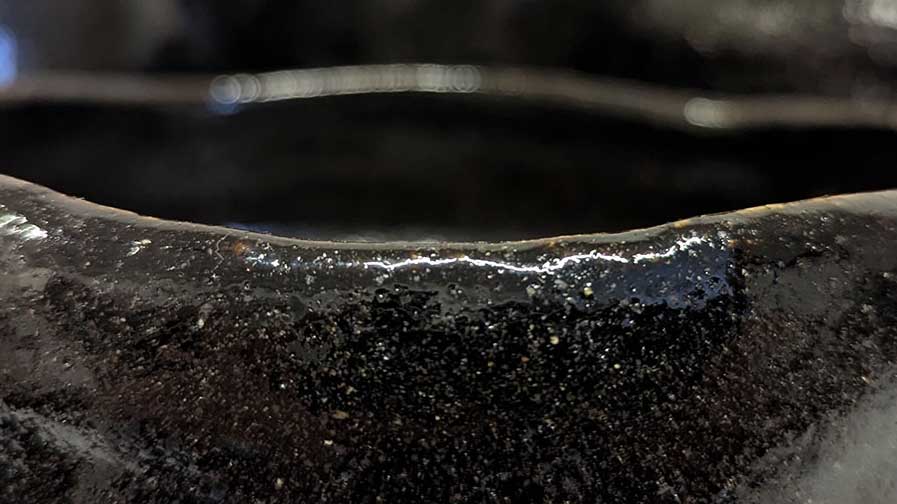
Hand-shaped rather than wheel-thrown, low-fired, and finished with deep black glaze, Kuro Raku bowls are designed specifically for tea. They emphasize weight, warmth, and how the bowl sits in the hands.
Raku does not age like Hagi, and it does not assert itself like Bizen. It stays close.
Choose Raku if:
- Tea practice is central to your use
- You value touch and balance over surface
- You want a bowl that disappears during use
- You prefer quiet intensity
Raku bowls often look simple, even crude, until you use them. Then they make sense immediately.
Side-by-Side: How They Really Differ
- Bizen is about fire and material.
Hagi is about time and use.
Raku is about touch and presence. - Bizen resists change.
Hagi embraces it.
Raku contains it.
If Bizen is a statement, Hagi is a conversation, and Raku is a pause.
Which One Should You Buy?
Ask yourself one question: how will this be used?
If the answer is “as an object in space,” start with Bizen.
If the answer is “over years of daily tea,” choose Hagi.
If the answer is “during focused moments of practice,” go with Raku.
Many experienced collectors eventually own all three — not as alternatives, but as complements.
A Final Word
Choosing between Bizen, Hagi, and Raku isn’t about ranking traditions. It’s about alignment.
Each style represents a different answer to the same question: what should pottery do?
Once you know which answer resonates, the choice becomes obvious.