
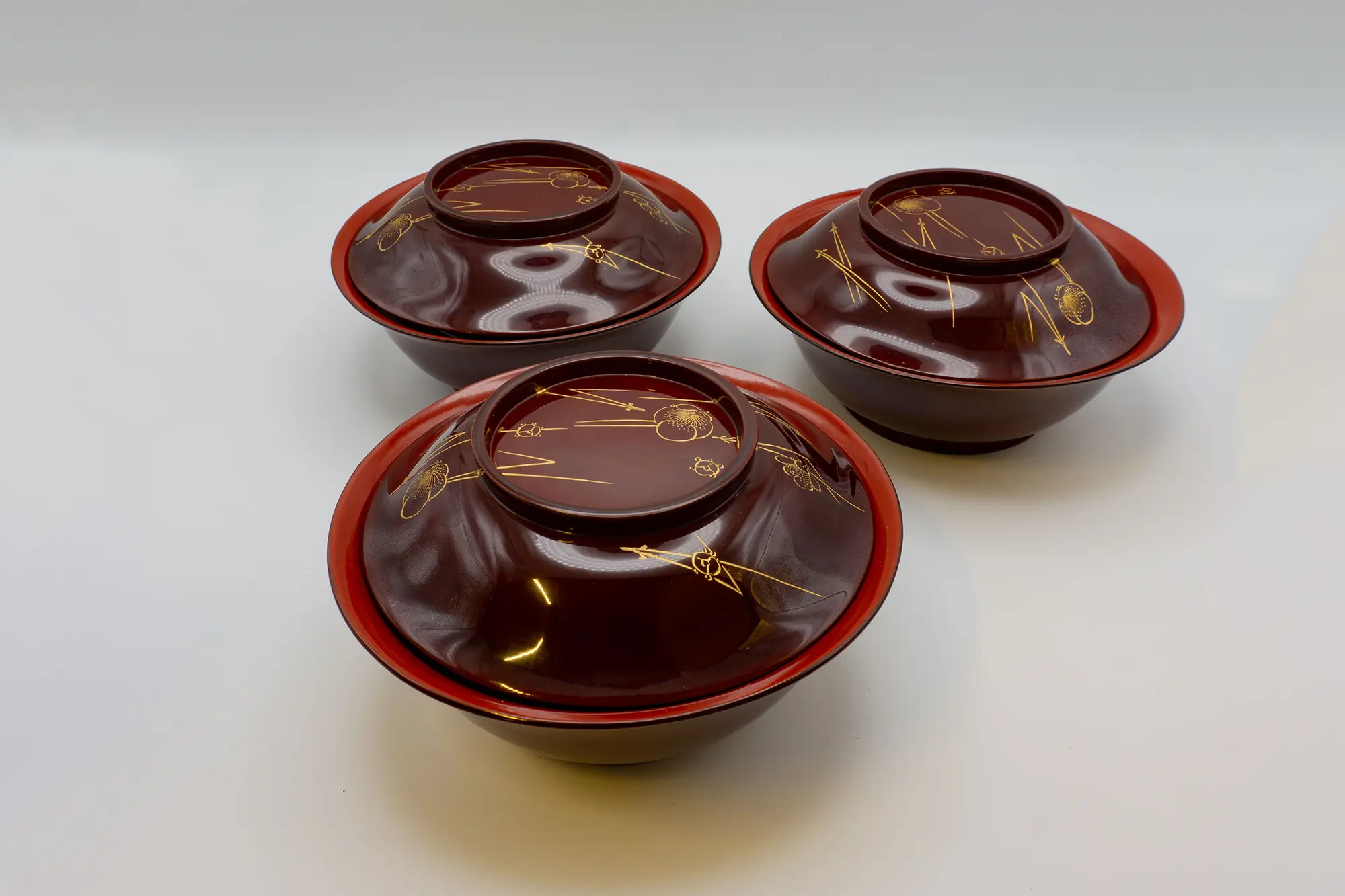
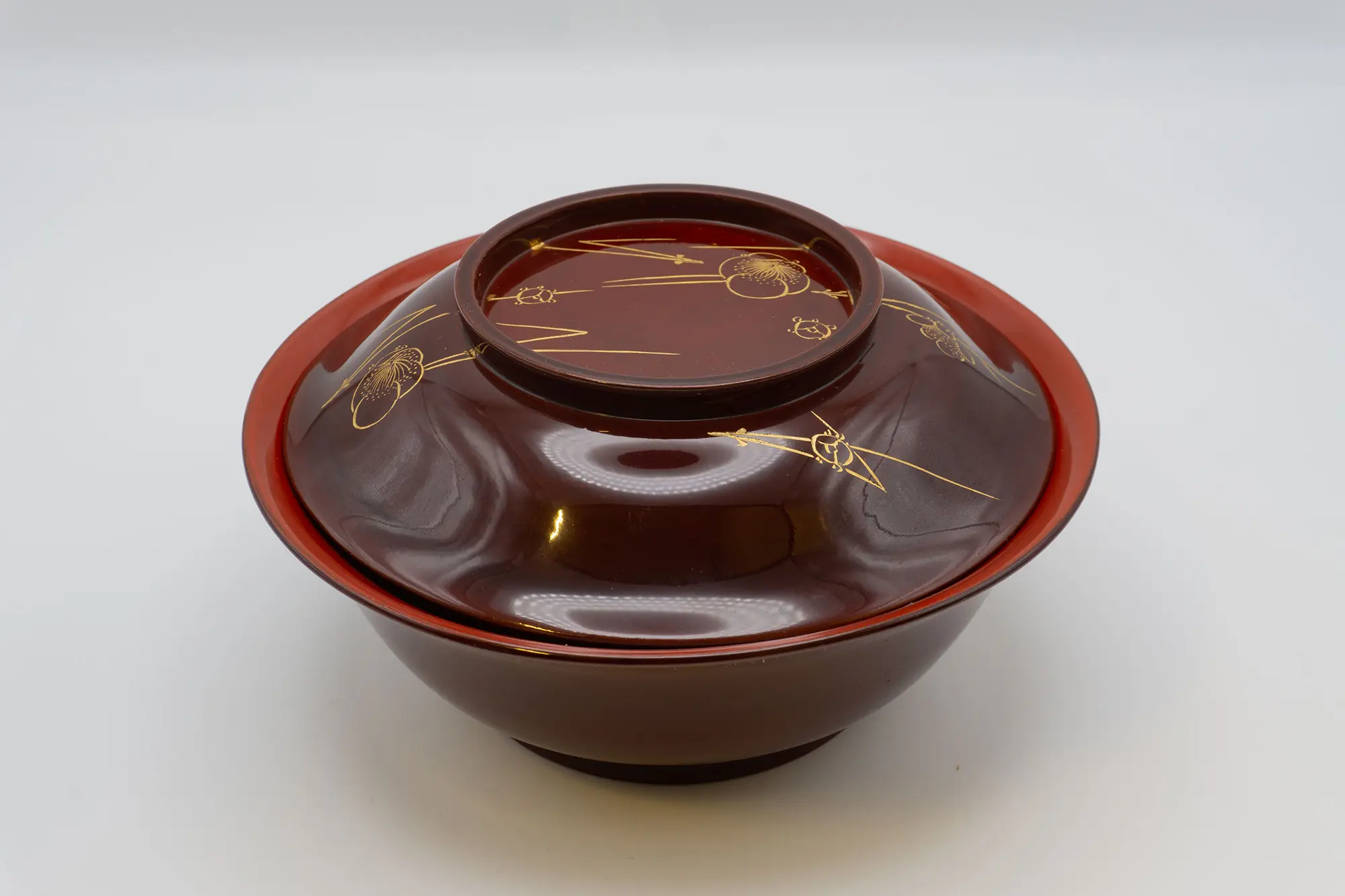




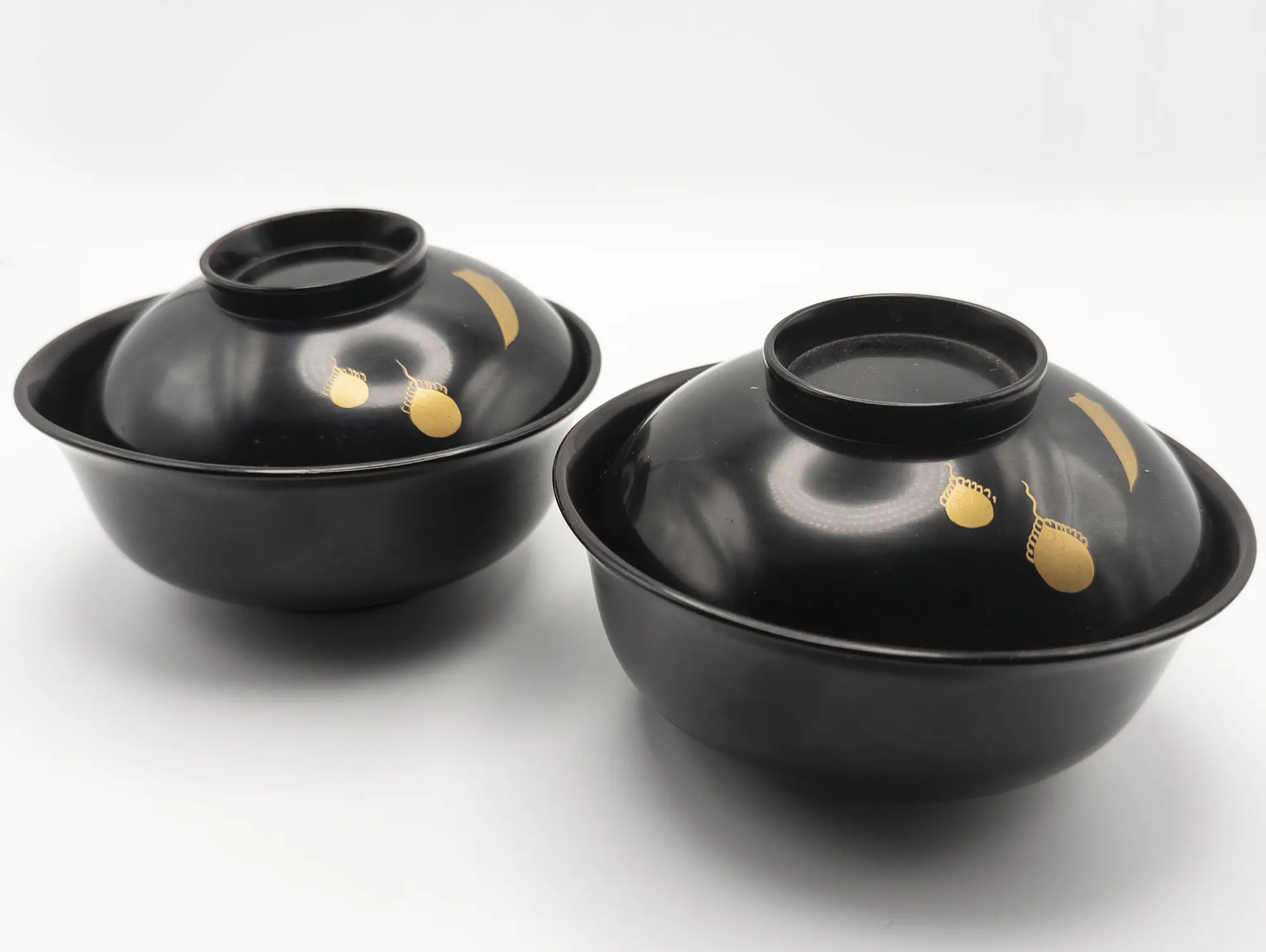

Japanese Urushi Lacquerware
Real Japanese lacquerware uses sap from the urushi tree. It’s not varnish, not shellac, not resin. Urushi hardens by humidity, not air, and once cured it’s tough, chemical-resistant, and slightly elastic.
Surface refinement and finish
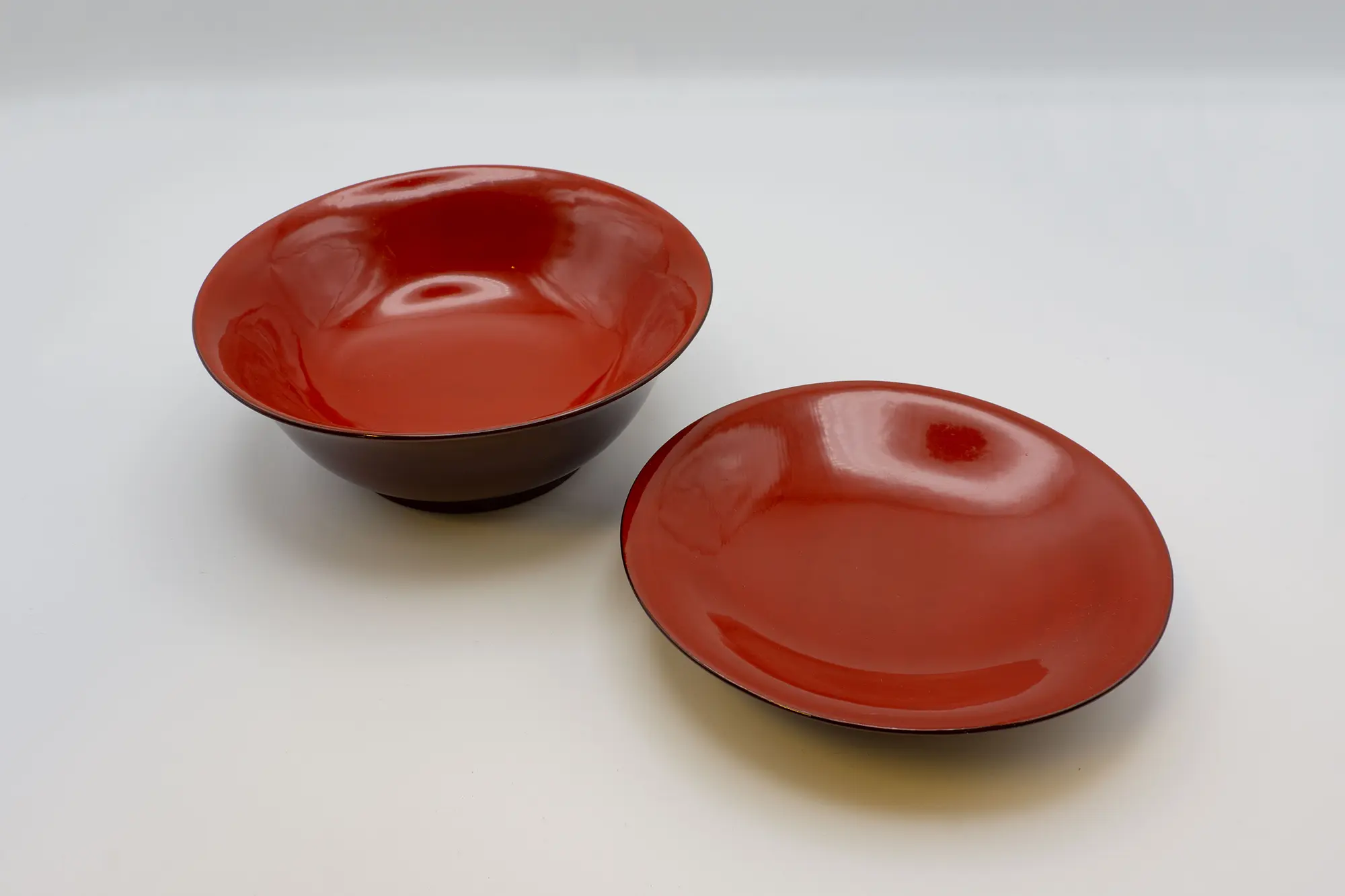
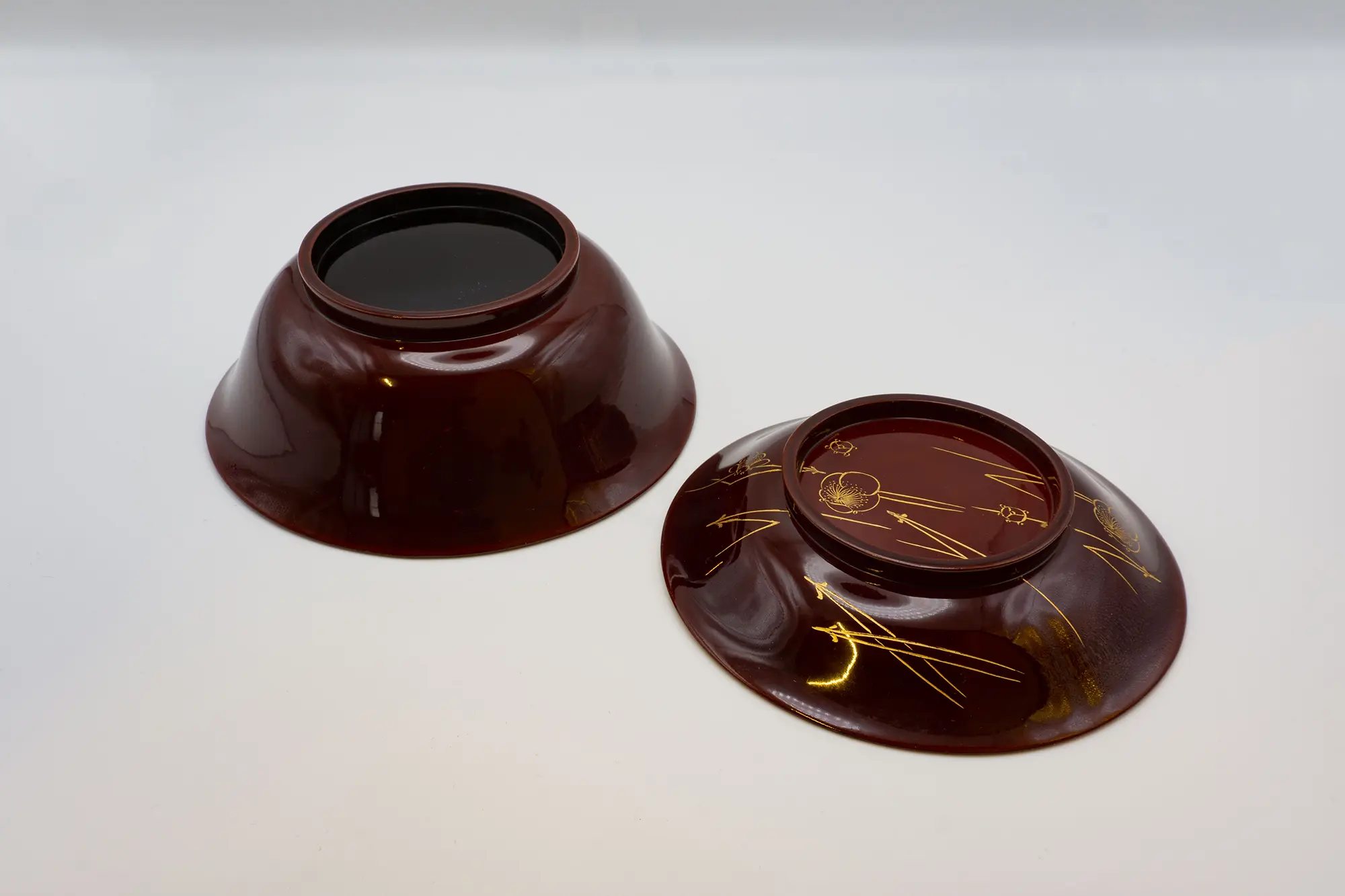
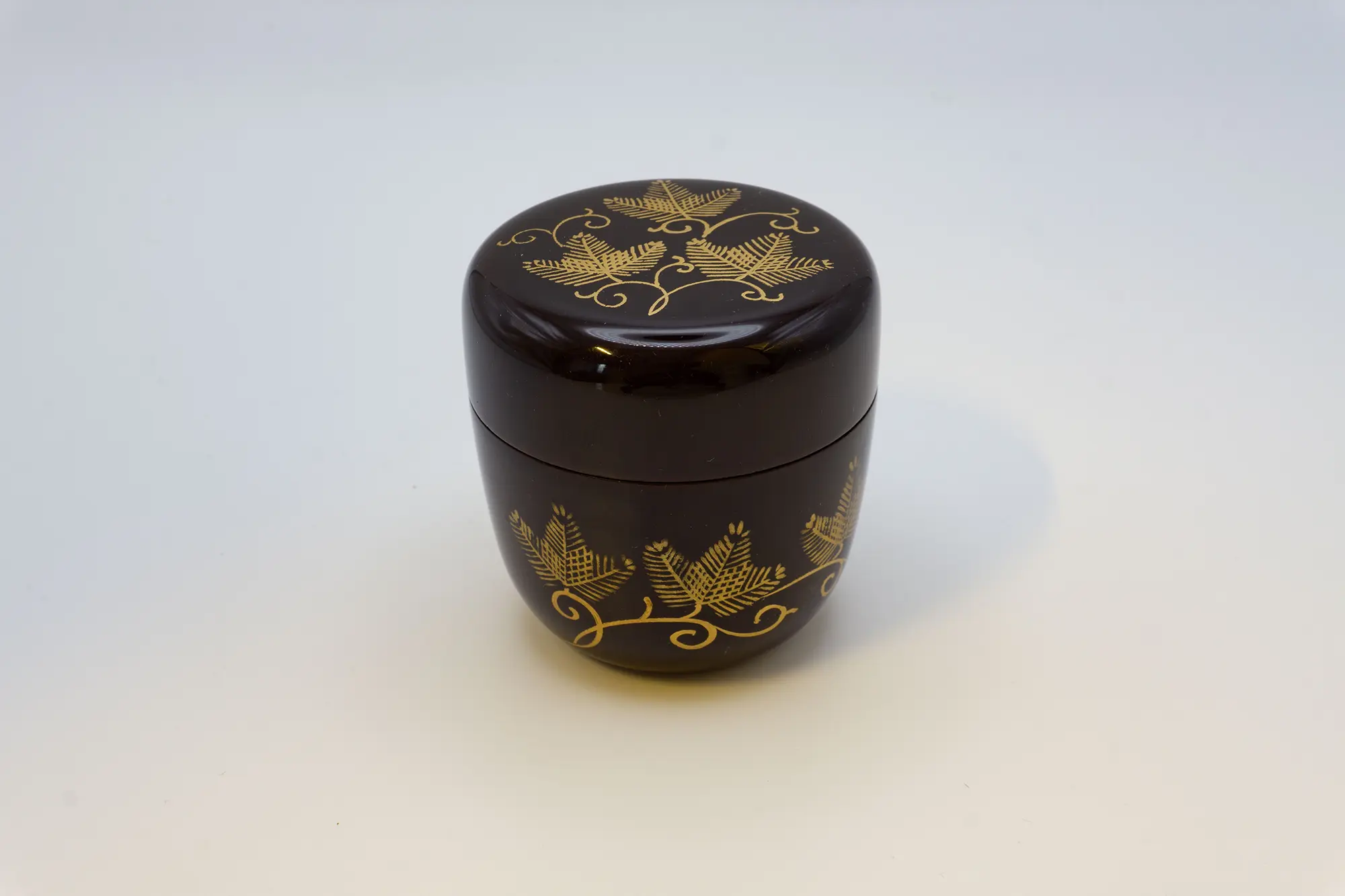
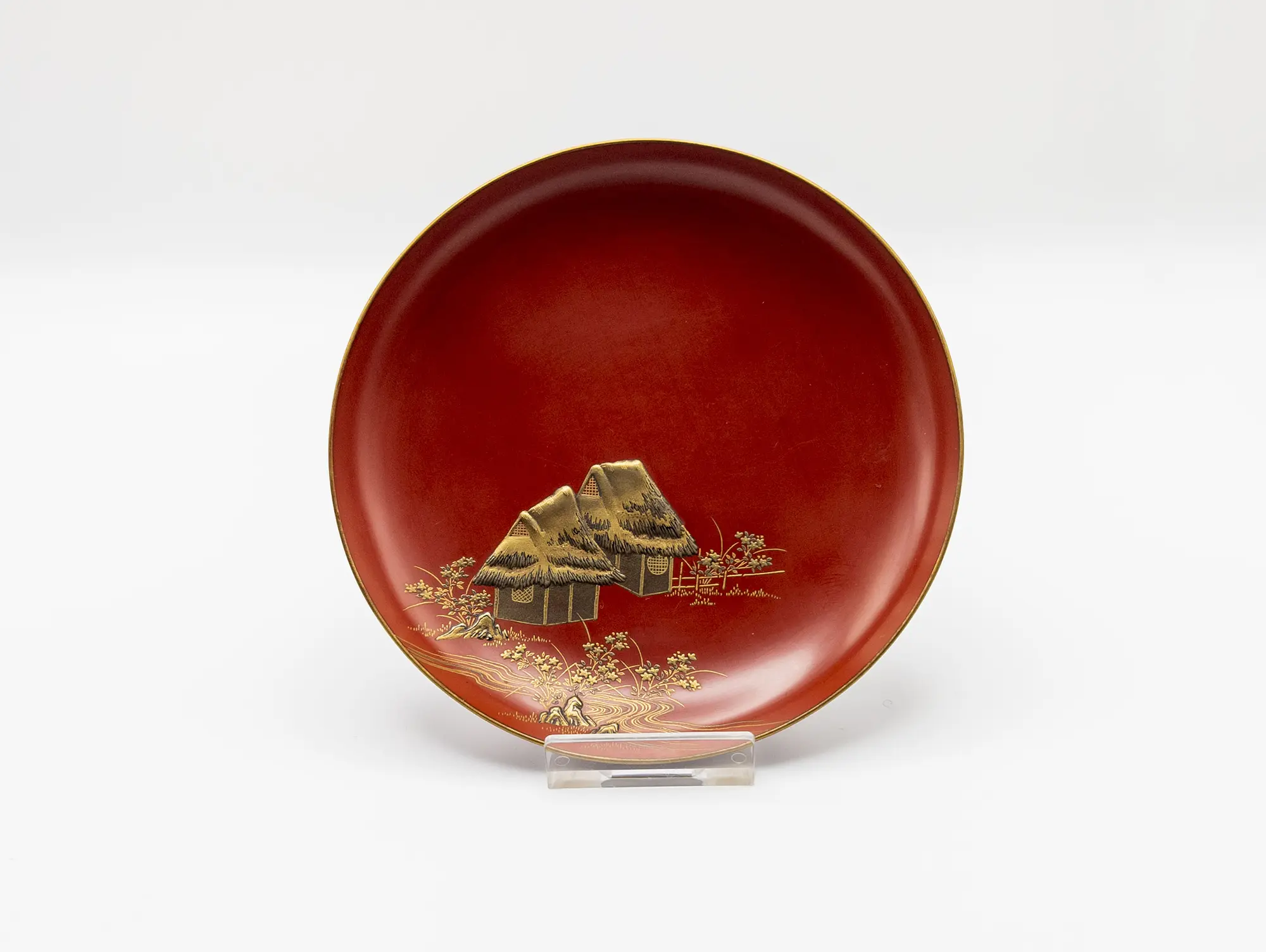
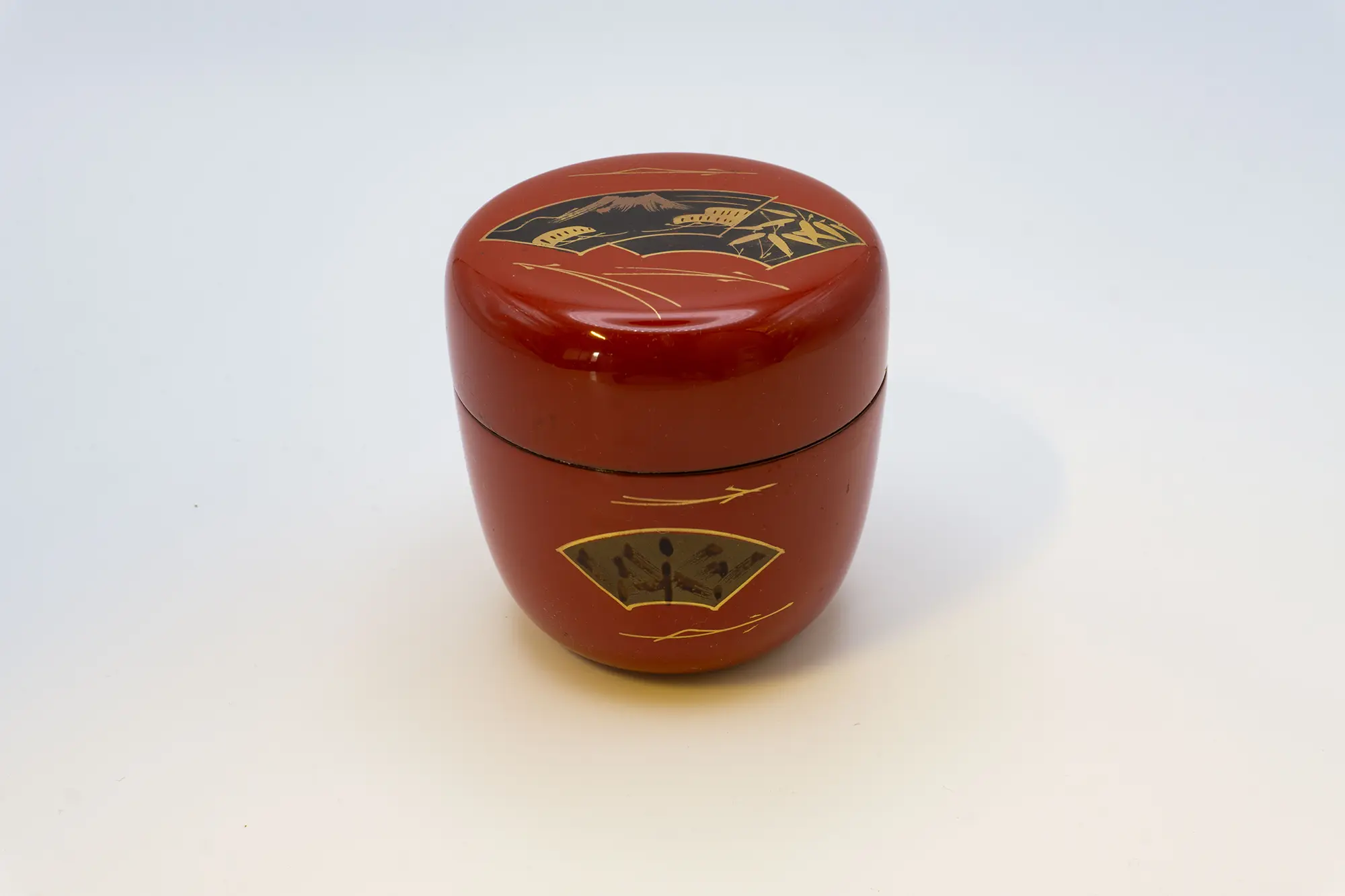
Whether glossy (roiro), matte, or textured, the surface is deliberate and controlled. Even simple black lacquer is about precision, not decoration. Sloppy edges, pooling, or uneven thickness are dead giveaways of cheap work.
Lacquerware decoration
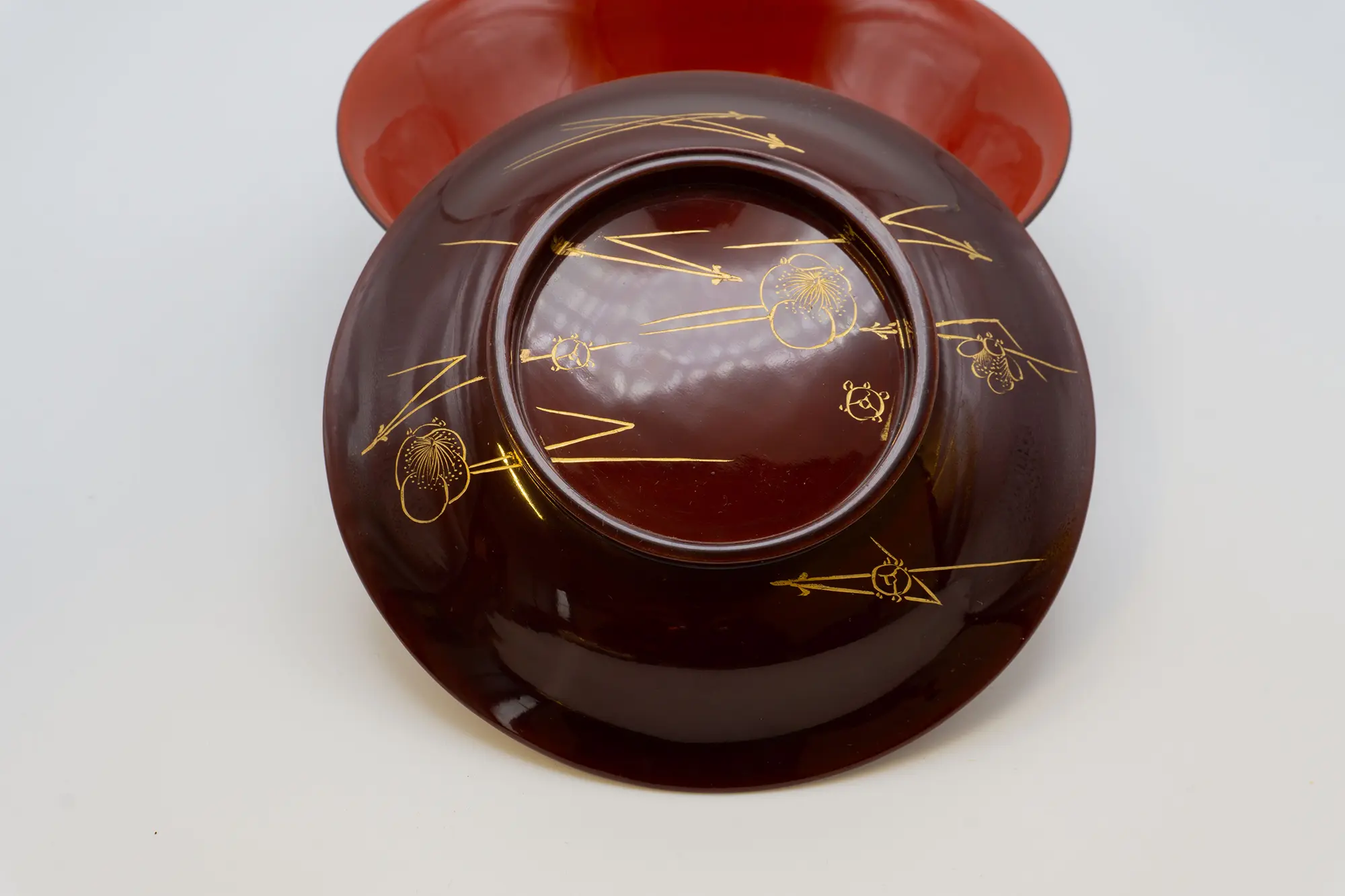
Techniques such as maki-e, gold leaf or nashiji are not just applied on top of the urushi, they’re embedded into the lacquer layers. With urushi lacquerware decoration is structural and represents centuries of tradition through technique.