
How to Date Japanese Bronzes: Edo vs Meiji vs Showa
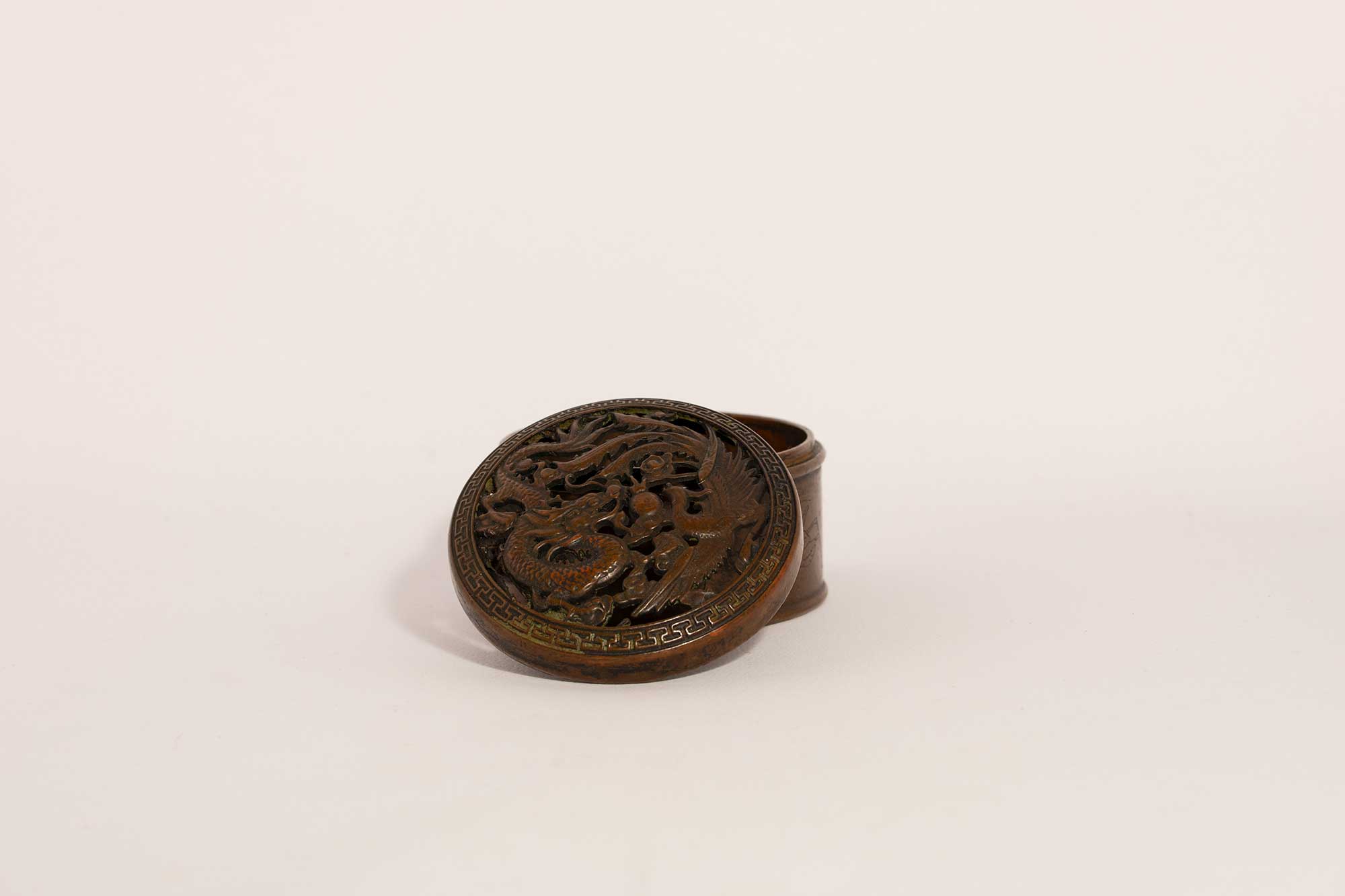
Correctly dating a Japanese bronze is one of the hardest — and most misunderstood — parts of collecting. Many bronzes on the market are loosely described as “Meiji” when they are not, while others are dismissed as late when they are in fact earlier. Dates alone are rarely written on the object, and signatures are often misleading.
This guide explains how specialists distinguish Edo, Meiji, and Showa bronzes by looking at construction, surface, patina, and intent, not just stylistic guesses.
Why dating Japanese bronzes is difficult
Japanese bronze techniques did not suddenly change in 1868. Workshops, tools, and craftsmen continued working across periods, especially in the early Meiji years. As a result, late Edo and early Meiji bronzes can appear very similar at first glance.
At the other end, early Showa bronzes often imitate Meiji export styles closely, but differ subtly in execution and finish. These subtleties are what matter.
Edo period bronzes (before 1868)
Edo-period bronzes were primarily made for domestic use: religious objects, incense burners, altar pieces, and utilitarian items. Even decorative works tend to feel restrained.
Typical characteristics include:
- heavier proportions
- simpler, quieter compositions
- surfaces that prioritize form over decoration
- patinas that developed naturally through use rather than display
Casting tends to be solid and conservative. Decorative excess is rare. When Edo bronzes are signed, the signatures are usually functional rather than promotional.
Meiji period bronzes (1868–1912)
Meiji bronzes mark a clear shift in ambition and audience. Many were produced specifically for export to Western collectors, world fairs, and exhibitions. This pushed craftsmen to demonstrate technical virtuosity.
Key indicators of Meiji bronzes include:
- highly developed modeling, especially in figures and animals
- extensive surface finishing after casting
- complex patinas with depth and variation
- compositions designed to impress visually
This is the period where Japanese bronze work reaches its highest international profile. The best examples balance technical bravura with control. When quality drops, it drops fast — which is why careful evaluation matters.
For a deeper explanation of what defines true Meiji bronzes, see the dedicated guide on Meiji Japanese bronzes.
Showa period bronzes (1926–1989)
Showa bronzes are where most misattributions occur. Early Showa works can look convincing, especially when made for export or in traditional styles. However, industrial methods increasingly influence production.
Common differences include:
- cleaner, more uniform casting
- patinas that appear even and predictable
- surface work that feels finished too quickly
- lighter overall weight for the size
These bronzes are not inherently bad, but they are different objects, made with different goals. Problems arise when they are presented as Meiji.
What NOT to rely on when dating
Signatures alone are unreliable. Famous names were reused, copied, or added later. A correct signature on a weak bronze does not upgrade the object.
Style alone is also insufficient. Traditional motifs continued well into the 20th century. Always evaluate construction and surface first.
How specialists actually date bronzes
Experienced dealers and collectors look at the object as a whole. They assess casting quality, chasing, patina behavior, and how the bronze responds to light and handling. Dating is rarely based on a single feature, but on the accumulation of consistent signals.
When several indicators point to the same period, confidence increases.
Japanese bronzes currently available
You can view currently available Japanese bronze objects here: Each piece is evaluated with period attribution based on the criteria outlined above, not on optimistic labeling.
Antique Japan Bronzes